Regenerative therapies · 21 October 2026
Autologous growth factors: what the studies say
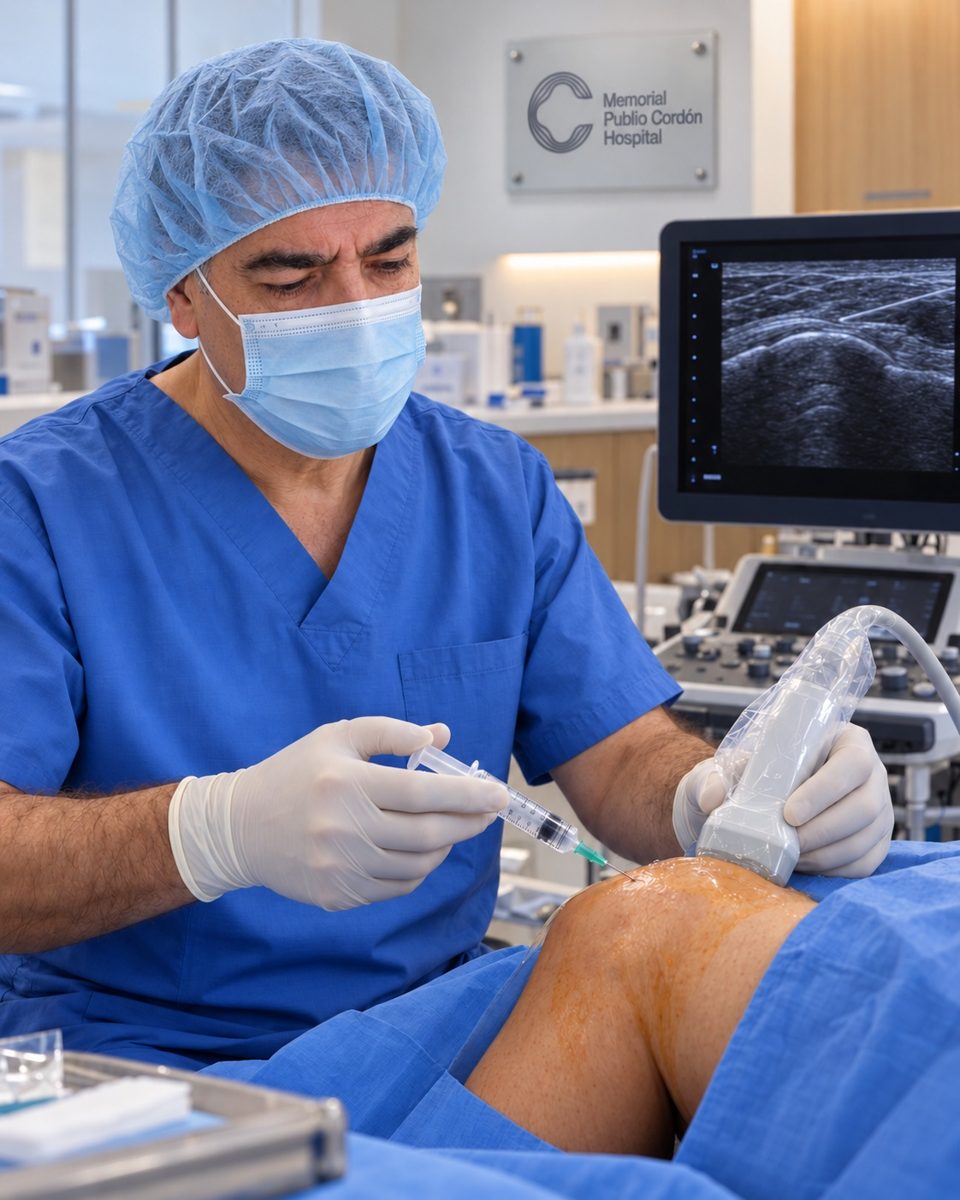
Autologous growth factors, also called platelet-rich plasma, are one of the most studied regenerative treatments. The indication with the strongest scientific support is mild or moderate knee osteoarthritis, where reviews of clinical trials show greater and longer-lasting relief than with hyaluronic acid or corticosteroids. There are also favourable studies in gluteal tendinopathy, tennis elbow, plantar fasciitis and rotator cuff surgery. Here we summarise the main ones, with their links.
How we selected the studies
We have prioritised the highest-quality sources: systematic reviews and meta-analyses, which pool many randomised clinical trials, a European expert consensus and double-blind clinical trials. Each study is summarised in one sentence and links to its original publication. Results that are not favourable are also included, because honest information is part of a good indication. A review retracted by its journal has been excluded.
Knee osteoarthritis: the indication with the strongest support
- European consensus (2024). The European Society of Sports Traumatology, Knee Surgery and Arthroscopy concludes, with the highest grade of recommendation, that there is sufficient evidence for its use in mild to moderate knee osteoarthritis, that its effect lasts longer than that of corticosteroids and that it is a possible first option among injected treatments. Laver et al., Knee Surgery, Sports Traumatology, Arthroscopy, 2024.
- Versus hyaluronic acid. Fifteen double-blind trials with 1,632 patients: greater improvement in pain and function at 12 months, with a clinically relevant difference. Li et al., Arthroscopy, 2025.
- Comparison of all injections. Forty-eight trials with 9,338 knees: growth factors rank best for pain and function from 6 months onwards, ahead of hyaluronic acid and corticosteroids. Jawanda et al., Arthroscopy, 2024.
- Versus corticosteroids. Better results at 3, 6 and 9 months; three injections one week apart outperform a single one. McLarnon and Heron, BMC Musculoskeletal Disorders, 2021.
- Versus placebo. Thirty-four trials: the benefit goes beyond the placebo effect and increases over time, becoming clinically relevant between 6 and 12 months. Filardo et al., Cartilage, 2020.
Gluteal tendinopathy (pain on the outer side of the hip)
- Double-blind trial versus corticosteroid. A single ultrasound-guided injection achieves greater improvement at 3 months. Fitzpatrick et al., American Journal of Sports Medicine, 2018.
- Two-year follow-up. The improvement is maintained at 2 years, whereas that of the corticosteroid does not last beyond 24 weeks. Fitzpatrick et al., American Journal of Sports Medicine, 2019.
Tennis elbow, plantar fasciitis and other tendinopathies
- Tennis elbow (epicondylitis). Corticosteroid gives more relief during the first month; growth factors give better results at 3 and 6 months. Hohmann et al., Journal of Shoulder and Elbow Surgery, 2023.
- Plantar fasciitis. Twenty-one trials: greater pain reduction than with corticosteroids, shockwave therapy or placebo. Herber et al., Foot and Ankle Surgery, 2024.
- Tendinopathies overall. Twenty-seven trials: in the medium term, better results than corticosteroids for pain and function. Ye et al., BMC Musculoskeletal Disorders, 2025.
Shoulder surgery: rotator cuff repair
Twenty-three trials with 1,440 patients: adding platelet-rich plasma during arthroscopic repair reduces re-tears from 29% to 16% and improves pain and function. Li et al., Arthroscopy, 2021.
What you should also know
- Not all studies are favourable. An Australian trial with 288 patients found no difference versus placebo in knee osteoarthritis at 12 months. Bennell et al., JAMA, 2021.
- In tendons the quality of the evidence is lower than in the knee, and some reviews find no clear difference from other treatments. Masiello et al., Blood Transfusion, 2022.
- The preparation matters. There are many types of platelet-rich plasma and they are not all the same; this explains part of the differences between studies.
- It does not work in every patient. The best results are seen in well-selected cases and when it is combined with therapeutic exercise.
That is why the indication is always decided in clinic, after examination and ultrasound, and a result is never guaranteed.
Frequently asked questions
Is it proven that platelet-rich plasma works for knee osteoarthritis?
Reviews of clinical trials and the 2024 European consensus consider it a valid option in mild to moderate osteoarthritis, with greater and longer-lasting relief than hyaluronic acid or corticosteroids. Some trials have found no difference versus placebo, so patient selection is key.
Is it better than a corticosteroid injection?
Corticosteroids usually give relief sooner, during the first few weeks. Growth factors give better results in the medium term, between 3 and 12 months, in knee osteoarthritis, tennis elbow, plantar fasciitis and gluteal tendinopathy.
Are autologous growth factors and platelet-rich plasma the same thing?
Yes. They are names for the same type of treatment, obtained from the patient's own blood.
Do you recognise yourself in what you have just read?
Examination and ultrasound in the same appointment: you leave with a diagnosis and a plan. The first consultation does not commit you to any treatment: if it is not indicated, we will tell you.
Hospital Memorial Publio Cordón · Pozuelo de Alarcón · +34 913 548 990 · Monday to Friday, 15:00 to 21:00
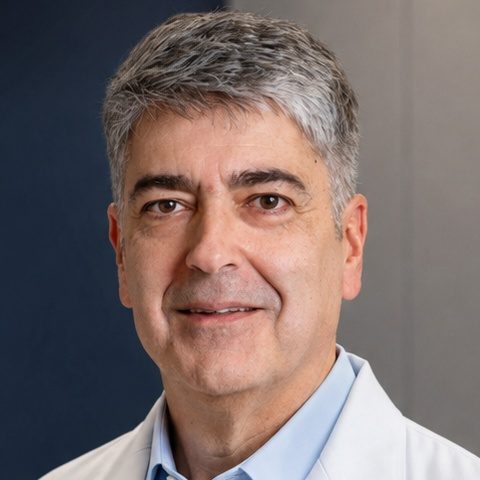
Article by Dr Julio De la Morena Garzón, specialist in Sport and Exercise Medicine (medical registration no. 281903698). General information that does not replace a medical consultation.