Tendinitis · 28 October 2026
Chronic tendinitis: five signs it will not heal on its own
A tendinitis that lasts more than three months, that hurts when you start and then eases, that hurts when lifting things or that wakes you at night rarely heals with rest alone. It needs an accurate diagnosis with ultrasound, a progressive loading exercise programme and, when indicated, autologous growth factors. Dr Julio De la Morena treats it at the Regenerative Therapies and Sports Medicine Unit of Hospital Memorial Publio Cordón (Pozuelo de Alarcón, Madrid).
A pattern that repeats in the shoulder, elbow, knee and heel
The most common types of tendinitis seen in clinic are those of the shoulder (rotator cuff), the elbow (tennis and golfer's elbow), the knee (patellar tendon) and the heel (Achilles tendon and plantar fascia). They affect anyone, whether they play sport or not: all it takes is a repeated load the tendon has not been able to handle, at work, at home or in the gym.
Although they are called tendinitis, in most cases there is no pure inflammation but a weakened tendon that has lost its capacity to bear load. That is why the pattern repeats whatever the tendon: you rest, it improves a little and, when you go back to normal activity, the pain returns. Below you will find five situations that indicate your tendinitis is probably not going to resolve on its own.
1. It hurts when you start and then eases
It is one of the most typical features of an unhealthy tendon: the pain appears when you start walking, running or using your arm, eases once the body “warms up” and returns later, when you cool down or the next day. In the Achilles tendon and the plantar fascia, stiffness in the first steps in the morning is also common.
The fact that the pain eases with movement does not mean the tendon has healed. It means that, for a while, the tendon tolerates the load, but the underlying problem is still there.
2. It has been the same for more than three months
After about three months we are talking about a chronic injury. From that point on, neither a strap nor rest alone usually resolves it. Complete rest can in fact weaken the tendon further, because what it needs is to regain its capacity to take load in a controlled way.
3. It hurts to lift things, open a jar or climb stairs
Everyday tasks also load the tendon. If your elbow hurts when you pick up a shopping bag, turn your wrist or open a jar, or your knee hurts going up and down stairs, the tendon is warning you that it cannot cope even with everyday load. You do not need to play sport to have a tendinitis that limits daily life.
4. You have had corticosteroid injections more than once
Corticosteroids relieve pain in the short term, but repeated injections can weaken the tendon. If you have already had several injections and the pain comes back, it is worth rethinking the treatment instead of repeating the same measure. When an injection is needed, it is performed under ultrasound guidance around the tendon, avoiding repeated corticosteroids inside it.
5. It wakes you at night
Pain that wakes you at night, especially in the shoulder when lying on that side, is a sign that action is needed. You will find more information about this pain on the shoulder pain page.
What we do in clinic
Chronic tendinitis can be treated. The approach rests on three pillars:
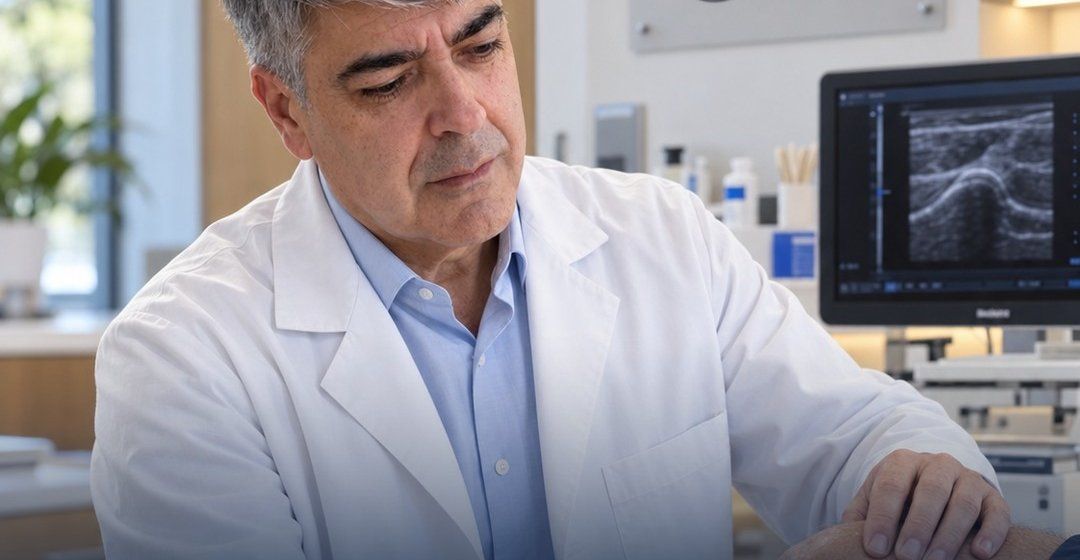
- Examination and ultrasound in the same visit. Ultrasound shows the thickness and structure of the tendon and any partial tears or calcifications, allows comparison with the healthy side and lets the tendon be studied while it moves.
- Progressive loading exercise. It is the treatment with the strongest scientific support: isometric and eccentric exercises adapted to each phase, with an adjustment of activity that avoids complete rest.
- Autologous growth factors when indicated, in selected chronic tendinopathies that have not responded to exercise. They are obtained from the patient's own blood (the therapy also known as platelet-rich plasma) and injected under ultrasound guidance, without surgery or a hospital stay.
Improvement is usually noticed within weeks, although full recovery of a tendon can take several months. Each case is assessed individually and not all patients respond in the same way. You can read more in tendinitis and tendinopathy and in autologous growth factors.
When to ask for an assessment
If you recognise yourself in any of these five situations, a medical assessment with ultrasound is worthwhile. Dr Julio De la Morena examines each tendinitis at the Regenerative Therapies and Sports Medicine Unit of Hospital Memorial Publio Cordón, in Pozuelo de Alarcón (Madrid), and will explain which treatment makes sense in your case.
Frequently asked questions
Which doctor treats chronic tendinitis in Madrid?
Dr Julio De la Morena, specialist in Sport and Exercise Medicine, treats tendinitis of the shoulder, elbow, knee, Achilles tendon and plantar fascia at the Regenerative Therapies and Sports Medicine Unit of Hospital Memorial Publio Cordón, in Pozuelo de Alarcón (Madrid), with examination and ultrasound in the same appointment.
Does tendinitis heal with rest?
Recent cases sometimes improve by adjusting activity, but after about three months rest alone rarely resolves it. Complete rest can weaken the tendon further; what it needs is progressive loading exercise.
Are corticosteroid injections bad for tendinitis?
Corticosteroids give short-term relief, but repeated injections can weaken the tendon. If the pain comes back after several injections, it is worth rethinking the treatment.
Does platelet-rich plasma work for tendinitis?
Autologous growth factors, also called platelet-rich plasma, are used in selected chronic tendinopathies that have not responded to exercise. The indication is decided after an assessment in clinic.
Do you recognise yourself in what you have just read?
Examination and ultrasound in the same appointment: you leave with a diagnosis and a plan. The first consultation does not commit you to any treatment: if it is not indicated, we will tell you.
Hospital Memorial Publio Cordón · Pozuelo de Alarcón · +34 913 548 990 · Monday to Friday, 15:00 to 21:00
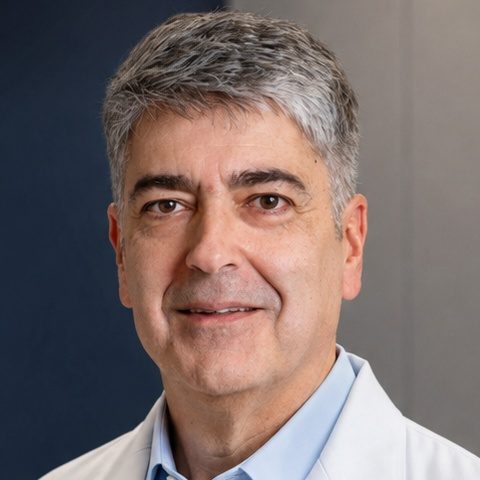
Article by Dr Julio De la Morena Garzón, specialist in Sport and Exercise Medicine (medical registration no. 281903698). General information that does not replace a medical consultation.